
Who Taught You? And Who's Teaching the Next Generation?
20 November 2026 · Willy McSkimming
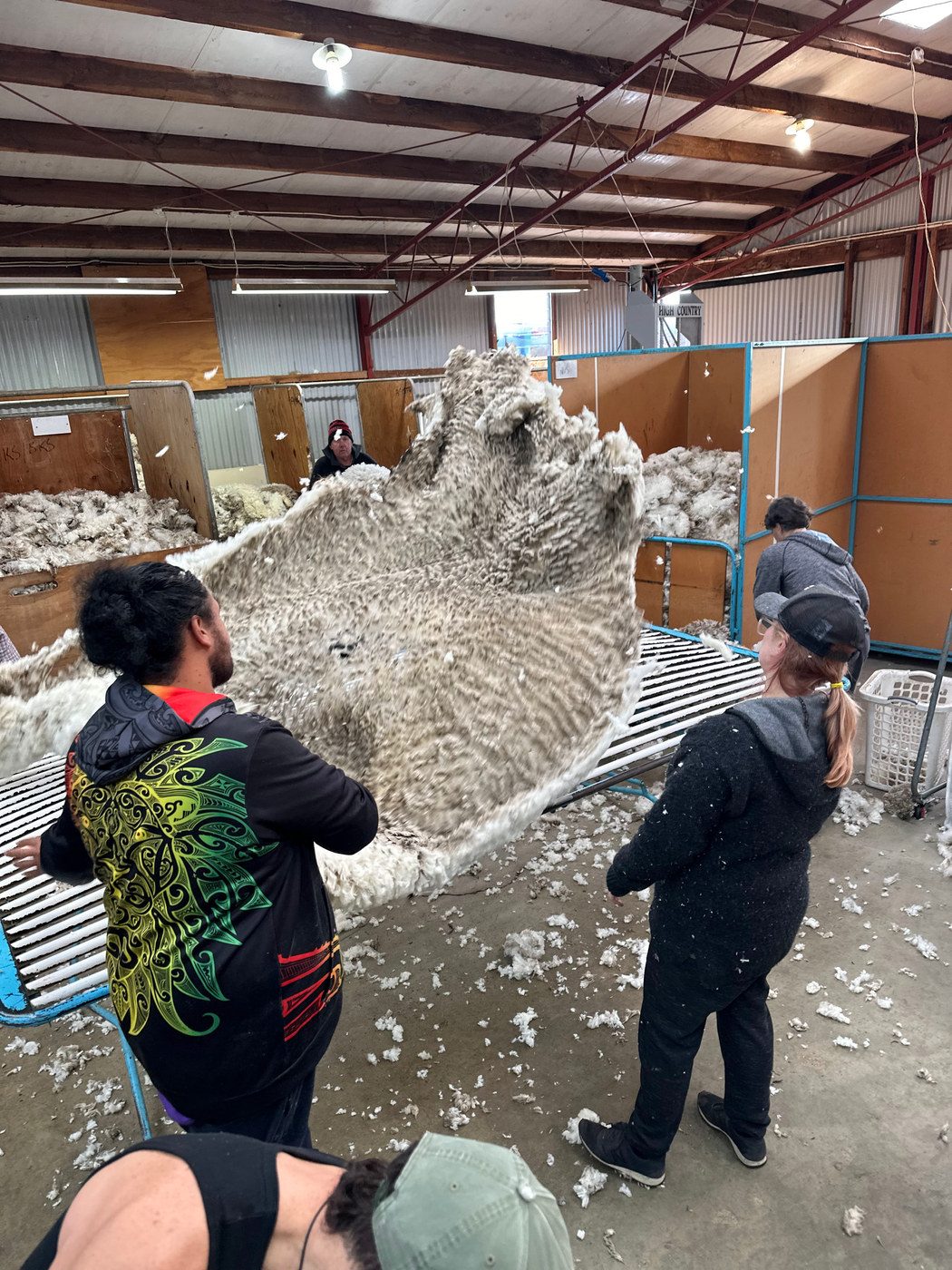
Our view on the wool levy, and why training is the bit we care about most.
A couple of weeks ago the NZ Wool Collective announced that a wool levy is going to a grower vote. It's likely to be 2–3 cents per kilo of greasy wool, with sheep farmers voting in February and March as part of the Beef + Lamb NZ referendum.
We ran a series of posts about it on our Facebook page. We didn't do that to tell anyone how to vote. We did it to get people talking, and to put one question on the table: what does this mean for training the people who work in the shed?
Plenty of you had something to say, and not all of you agreed with us. That's how it should be. Everyone in this industry sees it from a different stand. What follows is one view, ours, from a shearing business that's been at it a fair while and seen the industry when structured training was available and lived through it when it was not.
What we had, and what we lost
Shearer and woolhandler training in New Zealand used to be funded out of the wool levy. The Wool Board courses were regarded as the best in the world.
I did all my training under Tectra and graduated through their Modern Apprenticeship programme. It was an awesome way to learn. The training was spot on, and you made lifelong connections with the other students and the trainers. Nobody asked who you worked for. You turned up, got taught properly, and went back to work better than you left.
Farmers voted the levy out in 2009, and the training money went with it.
The 17 years since have been stop-start. Te Ako Wools wound up in 2018 because the tertiary funding model didn't fit how our industry works. A Provincial Growth Fund pilot in 2020 put $1.86 million in over two years, and when that money dried up the outfit running it folded. The providers still standing have been scrimping and scraping ever since on a largely user-pays model.
They can't keep that up forever. And if they go, there's nothing behind them.
What you told us
The comments were the best part of the whole exercise.
One local farmer told us she thinks a wool levy is very much needed, to put money back into research and development, education, and marketing the New Zealand wool story. She'd like to see it collected through Beef + Lamb NZ to keep the admin costs down, with a dedicated wool team, elected members and strong accountability behind it. Then she asked what the shearing sector thought. This article is a fair bit of our answer.
A lot of you went straight to the people who taught you. One shearer said that without his old-school teachers he'd "probably be a doughnut", and that he can shear anything now thanks to the ones who gave him the knowledge, the time and the patience. Another remembered Wool Board courses at Lincoln College, four days at a time. His point was that shearing is all about technique and you can't change that in a day, but by the end of the course your style had been tweaked and good habits had formed. A third kept it short: without the courses, he'd still be doing it the hard way.
Plenty of you backed training in the shed. One person pointed out that on-the-job training is what's happening now anyway, because some people can't afford to go on a course. They wanted training that covers how the whole shed works, with technique, safety and health and everyone in the same boat, because some shearers don't really know how hard the presser works. Another said in-house training would get whole teams doing the same basic wool prep from shed to shed. And one reminded us he started an in-shed training business back in 1997, with no public funding.
There was scepticism too, and most of it was about money. A trainer with years of experience across several countries said only a small percentage of training funding ever makes it to the ground floor, and that keeping it out of greedy hands and getting it into the sheds will always be the problem. Others asked where the money from earlier programmes went. One said plainly that setting up more bureaucracies isn't the answer.
The animal welfare course came up as well. One person doubted a one-hour course could change much. Another who had sat it said the bigger lessons are patience, knowing when to stop, and shed staff feeling able to speak up. The trainer made the point we'd been trying to make: the animal welfare training is one small unit of what should be a bigger, ongoing package, like it used to be.
And some of you pushed back on the whole idea. A contractor called it a great sentiment that will never happen, because operators are too competitive with each other. Someone asked whether you pay a bit more for the timber when you get a builder in, to help train the apprentices. Another reminded us that wool quality starts well before the shed, with breeding, selection and management. And one said farmers should be held to the same standards, pointing to full sheep, pre-shear drenching and water in the yards.
All fair, and all worth hearing.
Read back through them and a pattern shows up. Almost nobody said the industry doesn't need training. The arguments were about who pays, who runs it, and whether the money ever reaches the shed floor.
That tells you something. The need isn't in question. The trust is.
People have watched money come into this industry before and seen very little of it land on the board. So the hard questions aren't really about training at all. If money does come, who should hold it? Who decides what good training looks like, the people in an office or the people who've done the job? And how would any of us know, five years on, whether it worked?
Here's another one to chew on. Nearly everyone who commented could name the person who taught them. Who's going to be that person for the 17-year-old who starts next season? And who's paying for their time?
We don't have all the answers. But if we can't answer those questions as an industry, it won't matter how the vote goes.
Clearing something up
A few people thought we were talking about the animal welfare course. We weren't, and that's on us for not being clearer.
The Animal Welfare and Calm Sheep Handling course came out of the PETA footage. It's a short course, it's been well supported, and more than 480 shearers and shed staff have been through it. It was the right response to a bad situation.
But it isn't what we mean by training.
We're talking about the full pathway. A new entrant who has never picked up a handpiece, a broom or a press bar, taken all the way through to a professional. And experienced people getting the chance to keep sharpening up for as long as they're in the job.
A short course teaches you one thing. A training pathway is how you build a workforce and the culture to go with it in the first place.
What we want
Subsidised training for our industry, run by people who know what they're doing and won't waste the chance or the cash they've been given.
That's it. The rest is detail, but some of the detail matters.
It has to fit how we work. Most people choose this industry because they don't cope too well with sitting at a desk. I'm one of them. Training built around paperwork, enrolments and credits has been tried, and it hasn't stuck. That's not because it was bad. It just didn't suit the job or the people doing it.
It has to work for new entrants and for experienced staff. A learner needs a clear path in. An experienced shearer or woolhandler doesn't want to lose a day's work to sit a course. They'd rather learn on the job, where it costs less and there's less hassle for everyone.
And there's room for more than one way of doing it. A provider like Elite and good in-shed trainers aren't competing with each other. The industry needs both.
Whatever shape it takes, it has to be sustainable. We've watched too many good programmes run until the funding stopped.
Who pays?
This was the question that got the most heat, and fair enough.
In the posts we asked whether contractors should put something in alongside growers. If farmers are being asked to pay 2–3 cents a kilo, why shouldn't we?
Having thought about it more, and having read what you said, here's where I've got to. A separate contractor levy would probably be too hard to manage. Who collects it, how do you make sure everyone pays, and what does it cost to run? And being honest about it, the cost would more than likely end up on growers anyway, through the shearing rate.
But I, for one, wouldn't mind contributing in some way. We already do. We've subsidised or fully paid for our staff to go on courses for years, and every learner on a stand is a cost a contractor carries. I'd rather put that money into something organised that benefits the whole industry than keep carrying it shed by shed.
So I don't have a tidy answer on how. I just don't think it should all be on farmers.
It comes down to a vote
None of this is ours to decide.
The levy goes to growers in February and March. The full detail on what it will fund is due from mid-January. Right now the proposal talks about "training and education to improve wool quality and sector capability". It doesn't actually say what that means for shearers, woolhandlers and pressers just yet.
That vote, and what's in the final proposal, is what will ultimately decide how much, if any subsidised training our industry gets in the future. It might be a lot. It might be none.
If it goes through, and it's managed well by the right people, we're excited about where this industry could go. If it doesn't, the need doesn't go away. We'll still need a way to bring new people in and keep good people getting better.
That's our view. It's only one, and you're welcome to yours. Thanks to everyone who took the time to share their views and opinions with us.